
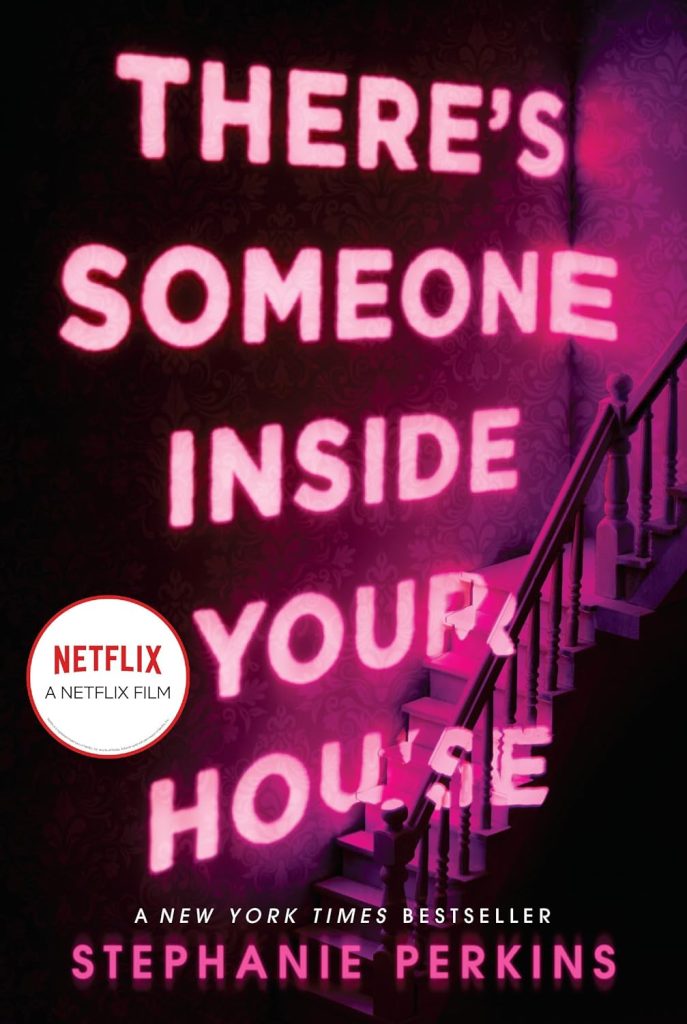
Stephanie Perkins made her name writing fluffy YA romances (Anna and the French Kiss, anyone?), so when she pivoted to horror in 2017 with There’s Someone Inside Your House, the reaction was basically a collective raised eyebrow. Like… murder? From the girl who gave us Parisian kisses and emotional hand-holding? But that’s exactly what makes this book interesting. It’s a slasher flick in book form, but there’s a softness around the edges—a story that’s as much about identity, grief, and connection as it is about who’s wielding the knife. And while it doesn’t always stick the landing, it’s doing something earnest and a little odd in the horror space—and that’s kind of why I liked it.
What’s it about?
The setup is straight out of a 90s teen screamfest: it’s October in rural Nebraska, and high school seniors are dying one by one in gruesome, very personalized murders. The killer is sneaky, theatrical—think: rearranging your furniture while you sleep before stabbing you in the chest theatrical—and the town of Osborne High is spinning into chaos. No one knows who’s next, and no one knows why.
Enter Makani Young, a recent transplant from Hawaii, living with her grandmother and trying very hard not to be noticed. Makani’s got a secret past that’s alluded to in vague, ominous terms (as per YA protocol) and a quiet crush on the school’s brooding outsider, Ollie Larsson, who wears eyeliner, works night shifts, and might be too pale to function. Classic setup. But just as their awkward romance starts to get traction, the murders start getting closer—both literally and emotionally.
Each murder scene is tailored to its victim: a theatre kid dies beneath the lighting rig they loved, a gamer finds their own rig turned against them, a teacher’s pet is mutilated in their bedroom full of college acceptance posters. It’s not just violence—it’s targeted. And while the killings are intense, they’re also oddly sterile: there’s no clear motive, no shared thread. Just the creeping fear that no one’s safe, and that someone, somewhere, is watching.
As the body count rises, Makani’s own secret starts to push toward the surface. We eventually learn what happened back in Hawaii—and it’s not nothing. Without spoiling, it’s a moment that reshaped her entire identity and made her flee her old life. And because this is a horror novel that wants to also be a story about trauma and reinvention, Makani’s guilt becomes entangled with the rising paranoia of the town. Is she a target? A suspect? A survivor waiting to happen?
When the killer is finally revealed, it’s not a huge twist so much as a thematic hinge. The motive is unsettling because it’s so ordinary—so empty of theatrical evil. There’s a sense that this is violence for the sake of control, or attention, or just… the thrill of disrupting lives. And the book ends less with a bang than a messy, emotional exhale: grief, relief, survival. But not really resolution.
What This Chick Thinks
A slasher with a soft center
This is where the book feels unusual. It wants to be both Scream and To All the Boys I’ve Loved Before, and sometimes it manages it. The romance between Makani and Ollie is gentle, hesitant, and surprisingly real—especially in the way it weaves around their trauma instead of pretending love erases it. I cared about them more than I expected to, and that gave the tension weight. You want them to make it out.
Horror that pulls its punches
Okay, this one’s tough. The murders are gruesome, but they’re not exactly scary. The first couple are shocking—there’s definitely some solid horror staging—but the tension dips in the middle, especially once you realize the killer isn’t really operating on a puzzle-box logic. The book stops being a “who’s doing this and why?” mystery and becomes more about the mood, the dread, the fallout. That’s fine—but it might not scratch the itch for hardcore horror fans who want the fear to build and peak.
The Hawaii backstory is a mixed bag
Makani’s secret past is teased for a long time, and when the reveal finally comes, it’s emotionally heavy but not quite earned. The pacing of that subplot feels uneven: it wants to be a psychological underpinning to the murder plot, but instead it reads like a separate novella that got stapled in. I appreciated what it was trying to say about guilt and forgiveness—but it needed more space or more integration to really hit.
A little too tidy in the end
When the killer is unmasked, the explanation is functional but thin. We get the who and the how, but the why doesn’t satisfy in the way you hope. That might be the point—some people hurt because they can—but in a story where character and motive are so important, it felt undercooked. I didn’t need a Hannibal Lecter monologue, but I needed more than what we got.
That said, the final chapters do a good job with the emotional cleanup. The fear doesn’t just vanish. There’s anxiety, survivor’s guilt, and a community that feels fractured, not fixed. That’s rare in YA horror, and it makes the story linger longer than you’d expect.
Final Thoughts
There’s Someone Inside Your House is trying to blend genre thrills with emotional honesty, and while it’s not flawless, I admire what it’s reaching for. It’s a slasher that slows down enough to ask how people live with fear, how we carry guilt, and whether love is something we can trust when the walls start closing in. It’s not the scariest thing I’ve ever read, but it’s got heart—and that makes it memorable.
Rating: 7.5/10
Try it if you like:
- Clown in a Cornfield — Adam Cesare
A high-octane YA slasher with sharper satire and bloodier set pieces. Less romance, more carnage—but same spirit of teen survival under siege. - There Will Be Lies — Nick Lake
A thriller with a deeply unreliable narrator and a strange, split-reality vibe. If you liked Makani’s internal conflict more than the murder plot, this one digs into identity and trauma in wild, unexpected ways. - Slasher Girls & Monster Boys — ed. April Genevieve Tucholke
A short story collection from top YA voices that’s full of inventive, creepy takes on classic horror tropes. Bonus: lots of female protagonists fighting back.
