
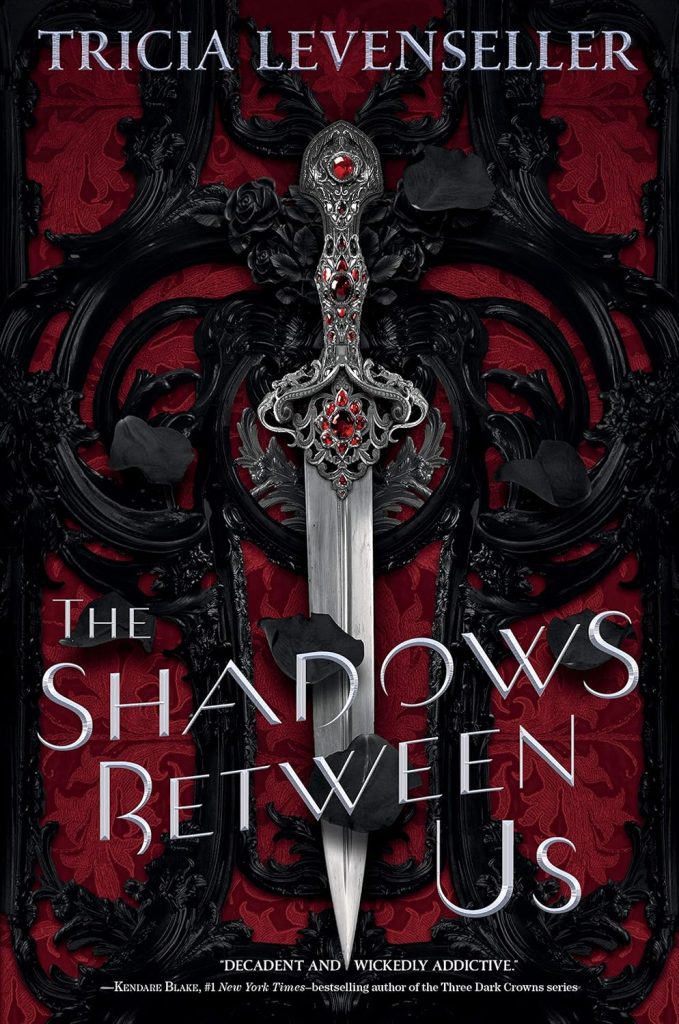
Tricia Levenseller is a reliable dealer in sharp-edged heroines and glossy court intrigue, and this 2020 standalone leans all the way in: a self-professed villainess sets out to woo the Shadow King, marry him, and then kill him so she can rule. It’s part rom-com, part murder plot, part fashion show, and it wears its ambition with a wink. What I like most is how unapologetically it centers a schemer learning the difference between hunger for power and hunger for a person.
What’s it about?
Alessandra Stathos opens the book by confessing she once killed a boy who broke her heart. That’s the tone-setter: she’s done apologizing for wanting things. As the overlooked second daughter of a minor noble house, she decides the fastest route to significance is very simple: charm the Shadow King, secure a wedding, and remove him from the board. Then the crown is hers.
Court, of course, is a nest of embroidery and knives. The young king, Kallias, is a legend wrapped in living shadows that swirl around him like armor; nobody can touch him, which means nobody can kill him. He keeps councilors and nobles at a careful distance while quietly hunting the traitors who murdered his parents. Alessandra arrives with a plan, a wardrobe she designs herself, and a smile that looks like a blade turned sideways.
She makes an immediate splash. The king notices. So do the vipers who think attention is a limited resource. Alessandra’s older sister tries to poach one of her suitors (as always), a flirty foreign lord keeps appearing at her elbow, and the king’s council pushes their own preferred brides like they’re playing chess with his life. Kallias, who’s sick of being managed, proposes an arrangement: Alessandra will pretend to be his consort to fend off political marriages; in return she gets proximity and perks. She says yes. Internally, she’s already picking out a crown.
The fake-dating setup turns into slow-burn proximity. Alessandra becomes the court’s most interesting scandal in record time: she throws parties that double as information-gathering exercises, befriends a shy noblewoman and helps her pursue a secret romance, spars with the king over trade policy, taxation, and what it means to rule well. Kallias watches her with the wary fascination of a man who has only ever been a symbol and suddenly finds himself across a chessboard from someone who refuses to be impressed by shadows.
Assassination attempts start stacking up. Poison in a cup. A blade loosed from a balcony. An “accident” that wasn’t. Alessandra pivots from predator to bodyguard when it counts, putting herself between the king and danger in ways that surprise even her. Together, they build a suspect list: ambitious councilors, jilted nobles, foreign meddlers, maybe even allies with secrets too big to confess. Court becomes both battlefield and ballroom—dancing in rooms where every conversation is a test, flirting that feels like strategy until it doesn’t.
Gradually, the masquerade slips. The king’s shadows behave strangely when he’s with Alessandra—less prickly, more responsive—and she starts to suspect the power is tied to emotion in ways he refuses to discuss. He, in turn, learns that Alessandra’s ruthlessness covers a precise sense of justice. She’ll steal a march on anyone, yes, but she’ll also bend the rules to protect the vulnerable, and she’s got a reformer’s brain hiding under all that velvet. Their conversations move from banter to statecraft: tariffs, roads, how to make the rich stop shrugging at the poor. The pretend relationship starts feeling like the real architecture of a partnership.
The murder mystery tightens. Alessandra follows money trails through ledgers and gossip, manipulates a rival into outing themselves, and engineers set pieces that reveal who’s been pulling which string. She also gets caught in her own web: evidence of that old murder threatens to surface, and a charming would-be revolutionary might not be as harmless as he looks. Meanwhile, the question neither of them wants to ask hovers like a chandelier: if Kallias lets the shadows fall—if touch becomes possible—what will that mean for his safety and the throne?
Everything collides at a ball engineered to force decisions. The assassin makes a last, brutal play. A secret identity is revealed in a way that reorders loyalties. Alessandra chooses between the plan she arrived with and the person she’s become in the king’s orbit. Kallias chooses between the walls that kept him alive and the vulnerability that might make living worthwhile. The outcome is part dagger, part declaration: the culprits are dealt with, the crown is secured, and the relationship that began as a gambit becomes a public promise with all the political teeth that implies.
The denouement is catnip if you like competent couples. Alessandra and Kallias set about ruling in the way that made them fall for each other: practical reforms, entertaining scandals, pleasure in being clever together. The book closes on a note that says happily-ever-after is a verb—something you do, not something that happens.
What This Chick Thinks
A heroine who says the quiet part out loud
Alessandra is vain, cunning, and refreshingly honest about both. I loved her because the book lets her be ambitious without slapping a “but she’s really sweet” sticker on top. Watching that ambition evolve from pure power-grab to partnership was the fun.
Fake dating meets court politics
The arrangement trope works here because it multiplies problems: every flirtation has witnesses, every choice has policy implications, and the chemistry isn’t just banter—it’s how they think together. I’m weak for competence kink, and this scratches that itch.
The Shadow King is more than a cape
Kallias’s power could have been pure aesthetic. Instead, it’s tied to grief, trust, and the risk of being known. The slow reveal of how the shadows function—and what it costs him to let them fall—gives the romance an actual pulse.
Mystery that does its job
This isn’t a twist-a-minute thriller, but the who’s-targeting-the-king thread keeps the pages flipping. The suspects are plausible, the reveals tidy, and the final confrontation hits that satisfying “oh, of course it was you” note.
Glam with a conscience
I expected gowns and gossip (and got them), but I appreciated how much time the book spends on the work of ruling: tax codes, trade routes, and whether kindness can be policy. It gives the glitter some grounding.
Tiny caveats
Some side characters are sketched broad (a cartoon villain here, a conveniently chatty witness there), and the prose occasionally leans purple. But the momentum and the charisma of the central duo make it easy to forgive.
Final Thoughts
The Shadows Between Us is a fizzy, knife-bright standalone that offers exactly what it promises: a villainous heroine with a heart under construction, a prickly king who has to learn to be seen, and a court where romance and strategy are the same dance. It’s deliciously readable and leaves you with the grin of someone who just watched two schemers realize they’re better as co-conspirators.
Rating: 8.5/10
Try it if you like:
- Serpent & Dove by Shelby Mahurin – Enemies-to-lovers in a church-haunted world, with secret identities, arranged proximity, and a heroine whose stubborn streak could bench-press a cathedral.
- The Bridge Kingdom by Danielle L. Jensen – Marriage-as-weapon politics, morally messy leads, and a slow slide from deception to devotion against a map full of sharp borders.
- These Hollow Vows by Lexi Ryan – Courtly intrigue, glamour and knives, a heroine who barters her heart to get what she wants, and a love triangle that actually earns the angst.
