
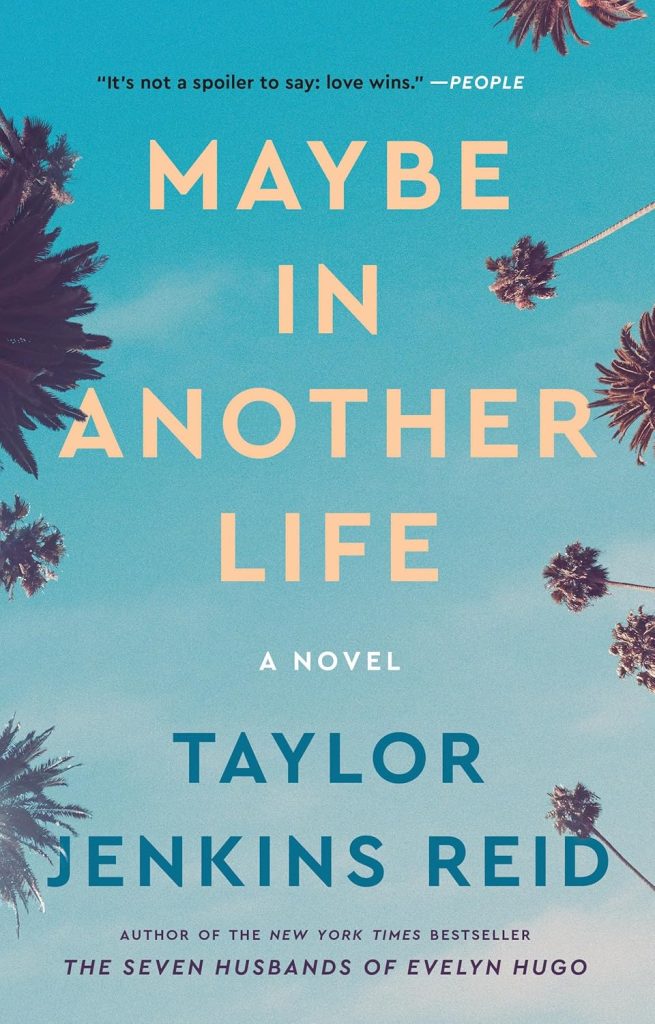
Before Taylor Jenkins Reid became the queen of glittering, faux-oral-history blockbusters (you know the ones), she was writing intimate, contemporary novels about messy humans at turning points. Maybe in Another Life is one of those early gems: a split-screen story where one tiny choice—stay out for a drink with an ex or catch a ride home with your best friend—fractures into two full lives. It’s a Sliding Doors premise with a big, squishy heart, the kind that lets you argue fate vs. free will while also texting your bestie to say “I love you, don’t let me make dumb choices.”
What’s it about?
Hannah Martin is twenty-nine and drifting with a smile. She’s bounced between cities and almost-careers, never quite landing long enough to call anywhere home. After a breakup and a bout of mild existential dread, she flies back to Los Angeles—the one place that still feels like a “what if.” Her plan is simple: crash with her ride-or-die best friend Gabby and Gabby’s husband, find a job, stop living out of boxes, maybe stop dating exhausting men.
Night one back, Gabby drags her to a neighborhood bar. It’s a happy chaos of hugs and cheap beer and someone yelling that they’ve put “Mr. Brightside” on the jukebox. And there’s Ethan: Hannah’s high-school almost-forever, the boy who was once the plan before plans got complicated. They talk with the weird ease of people who share a language from another life. Midnight rolls around. Gabby, yawning, asks if Hannah’s ready to head home. Ethan says stay, have one more. And here the book splits.
In one timeline, Hannah goes home with Gabby. They’re laughing about old teachers when headlights bloom too fast in the rearview. There’s a crash—crumpled metal, sirens, white ceiling tiles. Hannah wakes in a hospital with broken bones and pain that stacks like Jenga. She also meets Henry, a nurse with the steady hands and deadpan jokes of a person who’s seen a lot and knows the value of gentle. Recovery is ugly and slow: surgery, physical therapy, days measured in small wins. Gabby becomes the world’s most competent project manager of love—pill schedules, snack trays, relentless optimism. Ethan visits awkwardly, trying to bridge the sixteen feet between their present and their past. Henry keeps showing up with ginger ale and kindness that feels like a promise he never has to say out loud. Out of pain, a routine grows: books in bed, walks with a cane down the block, a life that is small for now but somehow fuller than anything Hannah’s had in years.
In the other timeline, Hannah stays with Ethan. They kiss in a way that makes the bar disappear. The night stretches into breakfast and “remember when” turns into “could we.” They try again, two older people with scar tissue and a surprising amount of tenderness. Hannah moves into the guest room at Gabby’s temporarily and starts sketching a future with Ethan that doesn’t look like a rom-com montage—job-hunting, family dinners, the slow process of relearning each other. But old ruptures don’t vanish on a nostalgic kiss. Why they broke up once matters; the ways their values align—and don’t—matter more. There’s a tangle with distance and trust, a decision neither of them can dodge, and the kind of big talk where you realise even soulmates have to do the paperwork of being compatible in the present, not just the past.
Both timelines fold Gabby’s life into the center, because Gabby is the constant. In one thread, the car crash forces her to confront a marriage that looks fine on Instagram and feels wrong in a quiet kitchen; secrets surface, apologies are tried on for size, and she has to decide whether love without honesty is just habit. In the other, without the crash, the same issues arrive more slowly but just as surely—because the truth has patience. The book keeps circling this idea: some things are meant, not in a mystical way, but in the sense that certain reckonings are coming for you no matter which road you take.
Hannah’s parents move through each version like weather—loving in their own slightly baffled way. Jobs come and go; one boss is great, one is a lesson. Ethan is not a villain or a savior in either thread; he’s simply a man with his own path, and in one life he walks beside Hannah and in the other he peels off at a fork. Henry, meanwhile, is an anchor in the recovery timeline—competent, kind, and quietly funny, the sort of man who makes reliability feel like romance. In both lives, cinnamon rolls appear (Hannah’s favorite—charmingly consistent), and Los Angeles plays backup: freeways, diners, little sunlit pockets where your life could plausibly start over on a Tuesday.
If you’re waiting for one version to be “the real one,” the book refuses. It treats both as equally true, equally messy. Each has a swoony thread (Ethan there, Henry here), but the central love story—the one that survives every split—is Hannah and Gabby. The final chapters in each timeline arrive at different destinations and the same thesis: the person you become is shaped by your choices, yes, but also by who refuses to let you be small. And in both futures, Hannah learns to pick a life on purpose instead of drifting into one.
What This Chick Thinks
The split-screen actually means something
Parallel-choices stories can feel like a gimmick; this one earns the form. The mirrored beats (a job prospect, a family reveal, a relationship test) show how character, not fate, decides the tone. It’s less “one right path” and more “you carry yourself wherever you go.”
Friendship as the North Star
Gabby is the book’s beating heart. The way she cares for Hannah in crisis, the way Hannah shows up for her when the marriage subplot blows up—this is a love story, full stop. It’s not anti-romance; it’s pro-best-friend, which I will always cheer.
Two romances, both plausible
Ethan is comfort-food nostalgia with grown-up edges; Henry is slow-bloom competence and quiet heat. Neither is a cardboard plot device. The book lets Hannah be attracted to different kinds of safety and asks smart questions about what lasts past the first rush.
Reid’s early-career superpower: readable clarity
Short chapters, clean scenes, dialogue that sounds like your friends. It’s deceptively simple prose that sneaks up on you with lines you want to underline. Perfect “one more chapter at midnight” energy.
Theme without sermon
Fate vs. choice is right there, but the novel never lectures. Instead it drops constants across timelines—cinnamon rolls, particular arguments, a street corner at the same time of day—and lets you do the math.
Tiny quibbles
A couple side characters shade toward type (an ex who twirls a metaphorical moustache; a parental pep talk engineered for tidy moral), and some readers may prefer one timeline so strongly they’ll skim the other. But the symmetry pays off if you let it.
Final Thoughts
Maybe in Another Life is tender, clever, and very re-readable—a comfort novel with a brain that whispers, “you would have been okay either way, but look how you grew here.” I closed it feeling weirdly buoyant and texting a friend to make brunch plans. Which, to me, is a win.
Rating: 9/10
Try it if you like:
- The Versions of Us — Laura Barnett – Parallel-path love story tracking what changes and what refuses to across decades.
- The Two Lives of Lydia Bird — Josie Silver – A grief-tinged split-life narrative where love and choice have to share the wheel.
- The Midnight Library — Matt Haig – Many-lives thought experiment with a warm center, asking what makes a life “right” when so many could fit.
