
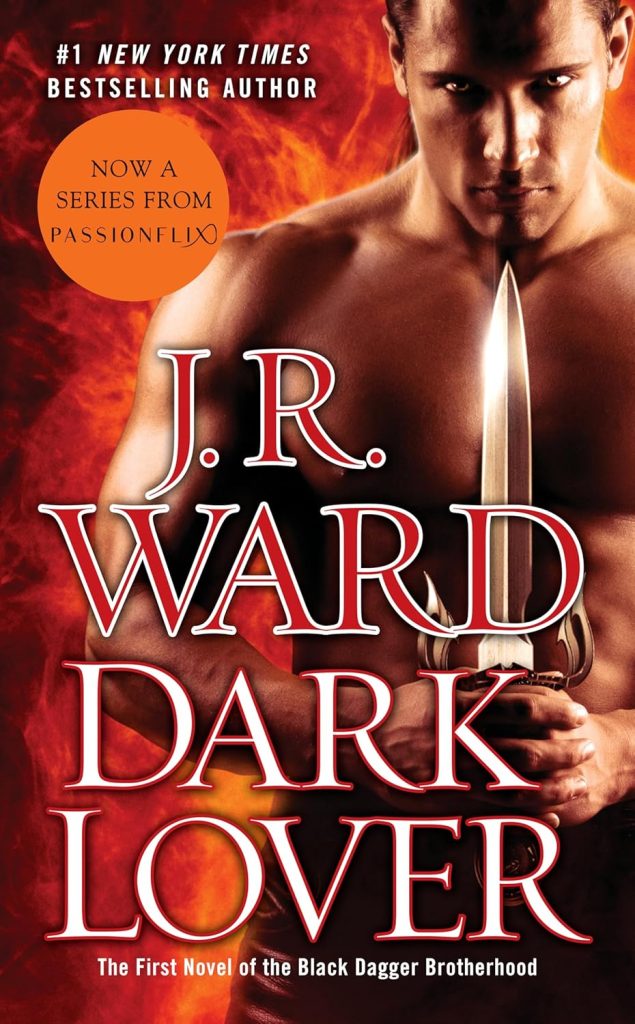
Back in 2005, J. R. Ward kicked off the Black Dagger Brotherhood with a thud of bass and leather—an unapologetically pulpy vampire romance that went on to spawn a sprawling series (and an army of devoted readers). Dark Lover is the opener: fated mates, a secret war in a rust-belt city, a last-of-his-kind king who hates the crown, and a heroine who never signed up for any of this. It’s moody, violent, swoony, and very mid-2000s in the best possible way.
What’s it about?
Caldwell, New York. In the shadows of the city’s nightclubs and boarded warehouses, an ancient war keeps flaring: vampires vs. the Lessening Society, a network of undead humans who’ve traded their souls to a cold, nameless “Omega” in exchange for power and a single mission—eradicate all vampires. The only serious line of defense is the Black Dagger Brotherhood: a brotherhood of elite male warriors—Wrath, Rhage, Zsadist, Vishous, Phury, Tohr—who fight like a small, vicious army and don’t particularly want anyone’s gratitude.
At the top of that heap is Wrath, last purebred vampire and reluctant king. Massive, nearly blind, permanently wrapped in shades, he’s spent centuries refusing the throne and sticking to what he likes: hunting. He owes a rare favor to Darius, an honorable vampire aristocrat with a secret—years ago Darius had a child with a human woman. The daughter, Beth Randall, grew up human in all the ways that matter, never knowing vampires were real. But if Beth carries enough vampire blood, she’ll undergo the transition in adulthood: a brutal, potentially lethal metamorphosis that requires protection and blood to survive. Darius wants Wrath to shepherd Beth through it. Wrath, allergic to responsibility and sentiment, says no.
Minutes later Darius’s car explodes—an assassination by the Lessers. Guilt punches through Wrath’s carefully cultivated indifference. He goes looking for Beth.
Beth is a crime reporter in Caldwell—sharp, lonely, and convinced the city is going to chew her up if she doesn’t stay two steps ahead. After a near-assault in an alley, she’s shaken and furious, then finds herself rescued by a stranger who moves like a shadow and radiates danger. That’s Wrath, trying to do the right thing without telling her anything she’ll believe. The spark is instant and inconvenient. Wrath’s plan to keep his distance lasts about five minutes.
Meanwhile, we meet the rest of the pieces on the board. The Brotherhood hole up in a fortified mansion under the watch of Tohrment, their leader; Vishous handles surveillance and tech; Rhage (the beautiful one) and Zsadist (the terrifying one) train and patrol. There’s also the glymera, the snooty vampire aristocracy who want a puppet king. On the human side we meet Butch O’Neal, a bruiser of a homicide cop who keeps tripping over vamp crime scenes and develops a nose for whatever’s stalking the alleys. Butch’s path will braid into the Brotherhood’s, whether anyone likes it or not.
Wrath finally approaches Beth properly—too late to prevent her first surge of transition symptoms but early enough to take charge. The truth lands all at once: vampires are real; she’s part of that world; and the change could kill her if she doesn’t have access to a strong vampire’s vein. When the pain hits, it’s bad. Wrath gets her to Havers, the vampire physician (and brother to Marissa, Wrath’s long-time, blood-only companion), and then does the intimate, necessary thing: he feeds Beth from his wrist to keep her alive. The scene is equal parts medical necessity and erotic fuse—classic Ward.
Beth survives the transition, emerging with heightened senses, hunger, and a pull toward Wrath that’s not just gratitude. Wrath, who’s kept himself shut down for centuries, bonds fast and hard. Vampire males bond in this world like wolves: possessive scenting, protective rage, laser focus on their female (their shellan if mated). Beth isn’t a docile prize; she pushes back, renegotiates, and forces Wrath to see her as a partner, not a porcelain thing.
External pressure mounts. The Lessers’ leader (Mr. X) is escalating, using human corruption to cover his hunts. One of his recruits targets Beth specifically; another ambush hits a member of the Brotherhood, ratcheting the war. The police circle—Butch senses a pattern in the bodies and won’t let it go, even as Vishous keeps trying to wipe memories and send him home. In the mansion, politics intrude: the glymera want Wrath on the throne to rubber-stamp their traditions; Wrath wants to keep killing and avoid speeches; Beth wants the truth he keeps not saying.
A botched Lesser snatch-and-grab brings everything to a head. Wrath’s world crashes into Beth’s human one—sirens, gunfire, a rescue that’s half feral, half tactical. Marissa, kind and painfully dignified, bows out when she realizes Wrath’s future doesn’t include her; Butch, furious and fascinated, ends up a quasi-captive ally who keeps his mouth shut and his eyes open. Wrath finally accepts that he can’t shoot his way out of kingship forever. If he wants his people to survive, he has to stand up and be what he is.
The climax is a two-front fight: Brotherhood vs. Lessers in a nasty, close-quarters brawl, and Wrath vs. his own fear of failing the crown. He survives the former by being exactly the weapon everyone says he is; he survives the latter by choosing Beth. Publicly. He claims her as his shellan, hands off the past, and formally takes the throne with the Brotherhood at his back. The book closes with Wrath and Beth mated—bond tight, stakes higher—and the war merely paused. The last purebred king didn’t want a crown; he got a queen instead and took both.
What This Chick Thinks
Big, velvet world-building (with a side of growl)
Ward’s vampire mythos is glossy and specific—bonded males, shellans, the glymera, the Lessening Society—with just enough ritual and slang to feel lived-in without drowning you in lore. It’s dark club + cathedral vibes, and it works.
Wrath & Beth: alpha heat, surprising tenderness
He’s a blunt instrument who learns nuance; she’s nobody’s consolation prize. Their dynamic is pure paranormal romance: fated pull plus real negotiation. Consent is clear, even when the biology goes feral, which mattered to me.
The Brotherhood as a hook for the series
Rhage, Zsadist, Vishous, Phury, Tohr—every brother enters the scene already wearing his own book’s promise. If you love ensemble casts where each side character feels like a cliffhanger with boots, welcome home.
Action that actually moves character
The fights aren’t just set pieces; they force choices—Wrath stepping into kingship, Beth claiming autonomy, Butch crossing a line he can’t uncross. The pacing stays tight: short chapters, clean stakes, no wasted beats.
2000s alpha edges (your mileage may vary)
Expect possessiveness, growly jealousy, and some dated macho posturing. I rolled my eyes a couple of times—but the book usually lets Beth set the temperature, which keeps the alpha-ness from steamrolling her.
The villains are more engine than enigma
The Lessers are scary in aggregate but a bit beige in personality. They function as a constant, anonymous threat rather than villains you’ll quote at parties. It keeps the focus on the romance, which is the point.
Final Thoughts
Dark Lover is glossy, fast, and fanged—exactly the kind of paranormal romance that defined the era and still hits if you’re craving big feelings with bigger fight scenes. It sets up an addictive series while delivering a complete, very satisfying love story. Did I one-click book two? Obviously.
Rating: 8/10
Try it if you like:
- A Hunger Like No Other — Kresley Cole – Immortals After Dark kicks off with feral alpha energy, lush world-building, and heat that fogs windows.
- Halfway to the Grave — Jeaniene Frost – A snarky, action-forward urban fantasy romance with a human–vampire pairing that crackles.
- Slave to Sensation — Nalini Singh – Not vamps, but the same sleek, high-stakes paranormal vibe with a deeply satisfying fated-bond romance.
