
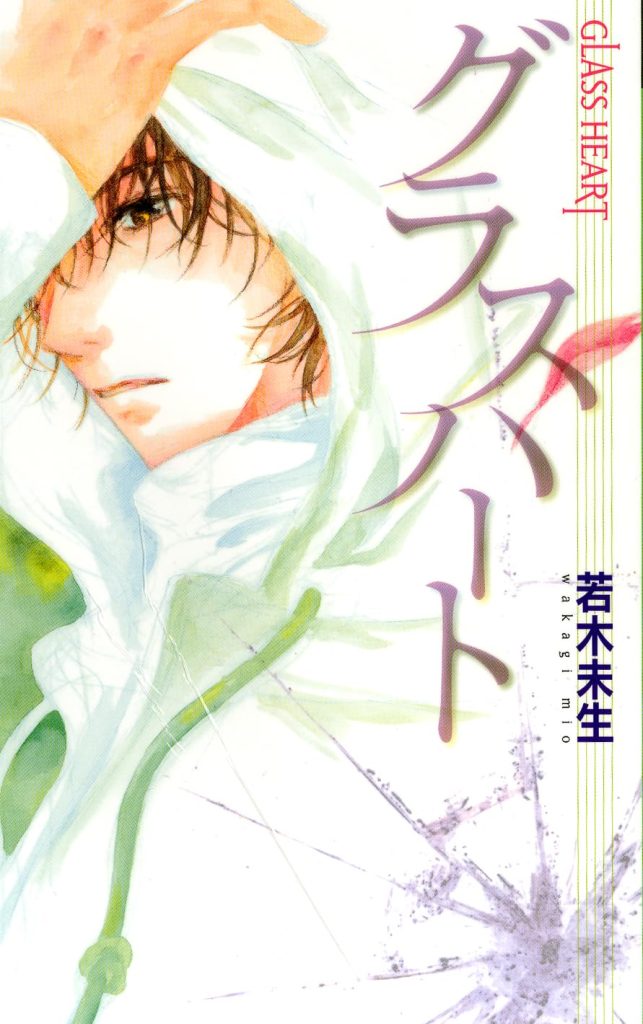
Mio Wakagi’s Glass Heart began as a Japanese light-novel series about music, talent, and the fragile engine that keeps artists moving. It’s the kind of cult title that readers pass hand to hand, not least because English editions aren’t exactly stacked in every bookstore. What hooked me is how squarely it plants you inside a band—its rehearsals, fallouts, tiny victories—and treats creativity like a living thing that’s both breakable and stubborn.
What’s it about?
We meet Akane Saijo, a teenage drummer who only wants to keep time and keep up. Her band has just fired her for the oldest, laziest reason—“we want a boys-only vibe”—and the loss hits like a cymbal crash. She goes home with calluses and pride, telling herself she’ll find a way back onstage even if it’s just in a basement with a borrowed kit. Then an invitation lands: Naoki Fujitani, a prodigy-composer known for making songs that feel like they’ve always existed, wants to meet.
Naoki is all contradictions: brilliant but quiet, precise to the point of prickly, the kind of person who will hear a metronome tick under city traffic. He’s building a new project and doesn’t just want a drummer; he wants this drummer. Akane is wary—not just of his reputation, but of his intensity. Still, she shows up to an audition in a shabby live house where the walls sweat history. She sits, counts herself in, and plays like she means it. Naoki says thank you in a way that sounds like stay. She does.
The band comes together in slow, messy scenes: Rei, a bassist with monk-like discipline; Haru, a mercurial guitarist who speaks in riffs; Minato, a keyboardist-producer who can turn any room into a studio with two cables and a prayer. They argue over tempo maps, swap snacks, and learn each other’s tells. Rehearsals start feeling like church: fluorescent lights, bottled water, and the ritual of trying again. Naoki pushes them hard—click tracks, micro-dynamics, this crash should land like rain, not thunder—and Akane bristles. Her groove is living, breathing; his charts look like blueprints. The tension becomes the point: together they find a middle where her feel and his structure lock.
Their first show is a small one, the kind where the sound engineer doubles as bouncer and barista. It goes badly. A cable dies mid-song, Naoki’s perfectionism goes white-hot, and Akane feels every old doubt shiver back to life. They read a few cutting comments online and pretend they didn’t. Then they meet in the park the next morning because quitting feels worse than embarrassment. Naoki plays a half-finished melody he’s been avoiding. Akane taps it out on the bench with her sticks. The song gets a name—“Glass Heart”—and the book finally tells you why: not because it’s fragile, but because it’s transparent. You can see everything running through it.
The next stretch is a montage built from small, exacting scenes. They track demos in a borrowed room that smells like dust and old amps. Minato teaches Akane a trick for keeping human feel under a click. Haru sulks and then apologizes with a chorus line so catchy you forgive him. Rei, who never says much, begins to say enough. We learn that Naoki’s obsession with control didn’t appear out of nowhere: there’s grief in his past, music entangled with loss, and a fear that the only way to keep something is to polish it until it gleams. When he finally shares that story, it’s not a melodrama dump; it’s a quiet admission that lets everyone else exhale.
Momentum arrives. A small label sniffs around. A rival band takes a swipe at Akane on social media and accidentally gives them free publicity. They book a better venue and sell it out to the kind of crowd that shows up early and listens. Their set isn’t perfect, but it’s alive: you can feel the room breathe with the snare, hear the way Akane counts transitions under her breath. Backstage, there’s laughter and bad noodles and a sense that the thing in their heads is becoming real.
Then the industry machine applies pressure. A manager-type offers “guidance” that smells like sanding off edges. A producer suggests quantizing the life out of Akane’s fills. Naoki freezes; compromise is the word he fears most. Akane surprises him by being the one who says, calmly, that not every concession is a betrayal. She’ll hold her feel; he can let a chorus breathe. Being a band means you decide together what can bend and what cannot.
A showcase gig becomes the crucible. It’s the hottest night of the year, the venue is packed, and halfway through the set the power hiccups—lights go, keys die, guitars stutter. It’s a mess. Akane doesn’t wait. She stands, clicks her sticks, and starts the beat by hand. The audience claps along, then sings the melody Naoki’s been drilling into their bones for months. One by one, the instruments come back online, layering in until the band is whole. It’s the kind of live moment that isn’t slick but is unforgettable, and it right-sizes everyone’s priorities at once.
After, the label is suddenly very interested, but on different terms. The band negotiates like people who know what they want: an EP instead of an album, time to tour small rooms, control over mixes, an agreement to keep Akane’s groove human. Naoki, who began as a man chasing perfection, chooses presence. Akane, who began as a girl trying to prove she deserved the stool, now simply takes her seat.
The book closes on an ordinary miracle: a cramped van, a scuffed kit buckled in, four musicians sleepy and hopeful, a setlist wedged into a visor. They’re not famous. They’re not finished. They’re a band. The heart is glass, yes—but that means it catches light.
What This Chick Thinks
You can almost hear it
Writing about music is notoriously hard; this nails the feel. Rehearsal scenes are tactile (sweaty sticks, dead strings, the smell of hot dust), and the live-gig moments thrum. I was tapping the margin.
A heroine who earns the spotlight
Akane isn’t “the girl drummer”; she’s the drummer. The book respects her craft and shows the slog: practice, self-doubt, the politics of being the only woman in the room, and the quiet joy of locking the pocket.
Genius-boy trope with actual nuance
Naoki starts as a familiar archetype—brilliant, exacting—but the story interrogates that mystique. His control issues have a history, and he learns to share the song, not just write it.
Industry realism without cynicism
I liked how labels, managers, and the online peanut gallery add pressure without turning into moustache-twirling villains. Compromise is complicated; the book lets it be.
Serial-feel pacing (that I didn’t mind)
You can sense the light-novel DNA: short, punchy chapters and scene-by-scene accrual rather than one big twist. For me, it worked—momentum through accumulation.
Tiny quibbles
A rival-band subplot resolves a shade too neatly, and one rehearsal blow-up repeats a beat we’ve already played. Minor gripes in a very satisfying set.
Final Thoughts
Glass Heart is a love letter to bands as families you choose and to the stubborn courage it takes to make something honest. It’s tender where it counts, tough where it should be, and genuinely fun to live inside. If you’ve ever stood in a small venue and felt your ribcage vibrate, this one will feel like coming home.
Rating: 9/10
Try it if you like:
- The Ensemble – Aja Gabel – A string quartet grows up together across years of rehearsals, rivalries, and hard-won devotion to the music and each other.
- Daisy Jones & The Six – Taylor Jenkins Reid – Band dynamics, creative chemistry, and the messy marriage between art and ego, told with propulsive, performative flair.
- This Is What It Feels Like – Rebecca Barrow – Three friends rebuild a band and a friendship after life detours, balancing grief, addiction recovery, and the joy of making noise together.
